
Sustainability Compendium
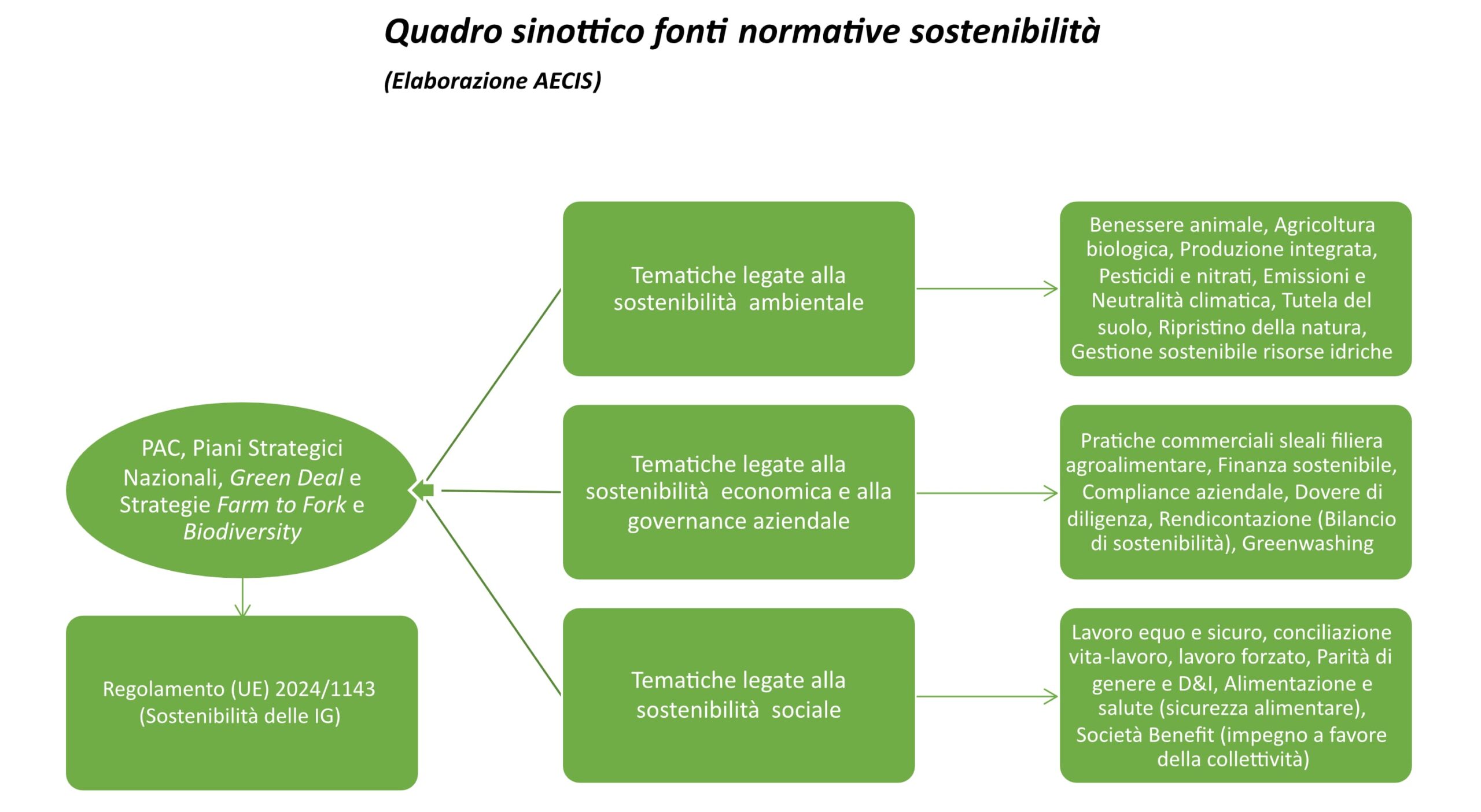
Sustainability legislation (in a broad sense) can cover specifically the GI sectors (e.g. Regulation 2024/1143), the agricultural sector alone (e.g. CAP legislative package), but also horizontally different or the generality of production sectors.
What follows is a collection of the main regulations that touch on the different dimensions of sustainability (economic, environmental, social, governance), enacted mainly at EU and national level, carried out by operating a classification that takes into account the aforementioned dimensions and giving priority to provisions that impact directly or indirectly on the agri-food supply chains.
These are the main “basic” rules that, by regulating the concept of sustainability in its various meanings, constitute the educational prerequisite and legislative substrate on which the multiple certification schemes are based (of organisation, product, process, and so on) currently operational and evolving.
A brief description of its content is proposed for each normative act reported.
La EU legislation gathers different types of measures (directives, regulations, decisions, Commission communications, etc.)., starting with the CAP legislative package, concerning aspects of sustainability that affect the operations of agri-food companies.
Similarly, the Italian regulations collects laws, legislative decrees and ministerial decrees issued at national level, mostly implementing European standards, which regulate key aspects of sustainability.

The CAP Regulations 2023-2027
On 6 December 2021, the three new CAP regulations were published in the EU Official Journal, following the European Parliament's positive vote on 23 November 2021 and the final approval by the Council of the European Union in early December. The three regulations concern the Member States' Strategic Plans, the Common Market Organisations, i quality schemes and Geographical Indications, e the financing, management and monitoring of the CAP.
The CAP legislative package addresses on a multidimensional level sustainability in the agricultural and agri-food sector.
The regulatory basis of the new Common Agricultural Policy has in fact brought a number of innovations, transposed within the National Strategic Plans, in terms of economic, environmental and social sustainability (through income support measures for sustainability, coupled payments, cross-compliance, eco-chemes, redistributive payments, rural and sectoral development support), supporting these interventions with resources from the EU budget.
Relevant CAP interventions affecting the dairy supply chain are, for example, those concerning animal welfare, the reduction of veterinary medicine, but also sustainable pasture management (enhanced cross-compliance measures and ecoschemes).
The financial support provided by the CAP is essentially structured in two pillars:
- 1st pillar of the CAP - direct payments and measures on agricultural markets
- 2nd CAP pillar - Rural development measures under the MFF (Multiannual Financial Framework); further rural development measures under the Next Generation EU (NGEU) programme (temporary instrument for recovery).
I three key regulations which form the essential backbone of the CAP are:
Regulation (EU) 2021/2115 of the European Parliament and of the Council of 2 December 2021 laying down rules on support for strategic plans to be drawn up by the Member States under the common agricultural policy (CAP strategic plans) and financed by the European Agricultural Guarantee Fund (EAGF) and the European Agricultural Fund for Rural Development (EAFRD) and repealing Regulations (EU) No 1305/2013 and (EU) No 1307/2013 (as amended)
Brief description of contents - The regulation lays down rules concerning:
- the general and specific objectives to be pursued through Union support financed by the European Agricultural Guarantee Fund (EAGF) and the European Agricultural Fund for Rural Development (EAFRD) within the framework of the Common Agricultural Policy (CAP), as well as the related indicators;
- the types of interventions and common requirements for the pursuit of these objectives by the Member States, as well as their financing modalities;
- CAP strategic plans drawn up by the Member States, which set the final targets, specify the conditions of the interventions and allocate the financial resources, in accordance with the specific objectives and identified needs;
- coordination and governance, as well as monitoring, reporting and evaluation.
General economic, environmental and social objectives of strategic plan support with CAP funds (Article 5):
- promote a smart, competitive, resilient and diversified agricultural sector that ensures long-term food security;
- support and strengthen environmental protection, including biodiversity, and climate action and contribute to the achievement of the Union's environmental and climate objectives, including the commitments under the Paris Agreement;
- strengthening the socio-economic fabric of rural areas.
The regulation stipulates that Member States must include in their CAP strategic plans a system of conditionality, under which an administrative penalty is imposed on farmers and other beneficiaries who receive payments if they do not comply with the mandatory management criteria provided for by Union law and the GAEC standards (Good Environmental Agronomic Conditions) set out in the CAP strategic plan for the following specific areas:
- climate and the environment, including water, soil and the biodiversity of ecosystems;
- public and plant health;
- animal welfare.
The same regulation also requires Member States to include a system of administrative penalties in their CAP strategic plans in the event of violations of regulations on employment conditions and the health and safety of workers (social conditionality).
Finally, it is worth mentioning the detail of the types of support intervention developed, which can take the form of: direct payments decoupled (income support for sustainability, young farmers, climate, environment and animal welfare) and coupled; sectoral interventions (who in the different supply chains must contribute to improving the economic, environmental and social sustainability of their agricultural production); rural development interventions (in relation to environmental and climate commitments, natural constraints, investments, young farmers and start-ups, risk management tools, cooperation, knowledge exchange and information dissemination).
Regulation (EU) 2021/2117 of the European Parliament and of the Council of 2 December 2021 amending Regulations (EU) No 1308/2013 establishing a common organisation of the markets in agricultural products, (EU) No 1151/2012 on quality schemes for agricultural products and foodstuffs, (EU) No 251/2014 on the definition, description, presentation, labelling and the protection of geographical indications of aromatised wine products and (EU) No 228/2013 laying down specific measures for agriculture in the outermost regions of the Union (as amended)
Brief description of contents - The regulation introduces important revisions/innovations to the CMO framework (e.g. sectoral marketing provisions), and the rules concerning Geographical Indications (protection, disciplinary changes, controls, supply regulation), also including vertical and horizontal initiatives for sustainability (with exemptions from the principle of competition for agreements, decisions and concerted practices of producers of agricultural products that relate to the production of and trade in agricultural products and that aim to apply sustainability standards that are stricter than those mandatory under Union or national law).
Among the changes made to Regulation 1151/2012 (no longer in force as it has been replaced by the new Reg. 2024/1143), significant is the addition concerning agricultural products, deserving protection under quality schemes, which must possess value-adding properties due to the production or processing methods used or their place of production or marketing, «or their contribution to sustainable development».
Regulation (EU) 2021/2116 of the European Parliament and of the Council of 2 December 2021 on the financing, management and monitoring of the common agricultural policy and repealing Regulation (EU) No 1306/2013 (as amended)
Brief description of contents - The regulation establishes the rules on the financing of CAP-related expenditure (European Agricultural Guarantee Fund-FEAGA and European Agricultural Fund for Rural Development-FEASR), on management and control systems to be set up by the Member States (competent authority, paying agencies, coordinating bodies, certifying bodies), on clearance and compliance procedures.
The latter includes provisions on the cross-compliance control system and cross-compliance-related administrative sanctions.

Green Deal, Farm to Fork, Biodiversity: Communications from the European Commission
Brief description of contents - In November 2019, the Commission published the Communication on the European Green Deal. The ambitious goal is to make Europe the first climate neutral continent, with the EU aiming to be climate neutral by 2050.
The Communication urges Member States to incentivise all stakeholders to adopt solutions to reduce emissions from all production sectors, extend the emissions trading system, develop cleaner energy sources and green technologies, develop a truly circular economy and protect biodiversity, and directs future EU policies towards these priorities.
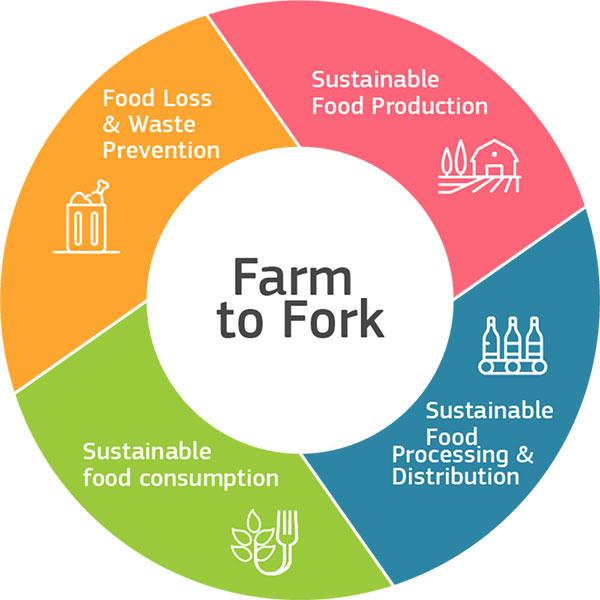
Brief description of contents - As stated by the Commission itself, the Farm to Fork strategy is at the heart of the European Green Deal, as it addresses the challenges of sustainable food systems in a systemic way, recognising the connections between the health of individuals, societies and the environment. The 10-year Strategy is developed around six macro-objectives, which concern the sustainability of food production, food security, sustainability in the stages of the food supply chain after agriculture (distribution, sale, catering, etc.), the promotion of sustainable food consumption, the reduction of food losses and waste, and the fight against fraud in the food supply chain. It is, therefore, a very broad strategy that cuts across different European policies and funds, designed to address several challenges that require a systemic and complex approach declined in some ambitious objectives to be achieved by 2030, including:
- 50% reduction in the use of chemical pesticides;
- 50% reduction of nutrient loss, for the recovery of soil fertility;
- Reduction in fertiliser use by 20%;
- Reduction of 50% sales of antimicrobials for farm animals and antibiotics for aquaculture;
- Achievement of at least 25% of organic farmland at European level.
Brief description of contents - The other major pillar of the European Green Deal is the EU Biodiversity Strategy. The strategy reaffirms and systematises many of the environmental management principles that had been detailed in various regulations and directives over the past decades, introducing new ones and integrating them into a complex and ambitious strategy. With reference to the impacts of the pandemic crisis, the strategy states that “investing in nature protection and restoration will also be crucial for Europe's economic recovery from the COVID-19 crisis“, thus recognising the close link between sustainable economic growth and the protection of biodiversity. There are several ambitious goals that the Commission plans to achieve by 2030 (protected areas and species, ecological corridors, protection of soil fertility, reduction of erosion and increase of organic matter in the soil, protection of marine and freshwater ecosystems, repopulation of forests). These include the allocation of at least 10% of agricultural land to characteristic landscape elements with high diversity.
The CAP Strategic Plan (SPP) 2023-2027 for Italy
The objectives of the CAP for the period 2023-2027 focus on social, environmental and economic aspects, form the basis on which the EU Member States have developed their respective strategic plans.
On 2 December 2022, it was approved by European Commission Implementing Decision (C(2022) 8645 final) the CAP Strategic Plan 2023-2027 (SPP) of Italy. The approval of the PSP came at the end of a complex process of negotiation and discussion with the European Commission that began with the notification of the first strategy proposal on 31 December 2021.
The PHP represents an ambitious strategy with respect to several objectives of competitiveness, environmental sustainability, territorial balance and food quality, It is in close synergy with other, not strictly agricultural policies, which nevertheless reinforce its scope and effectiveness: from the PNRR to cohesion policies. For the first time, all instruments that can be financed through the two main European funds affecting the primary sector, the EAGF and EAFRD, are included in one common programming document at national level, outlining a national strategy for the agricultural, agri-food and forestry sector.
The Plan provides in the 173 interventions overall, between First and Second Pillar, and financial resources totalling almost EUR 37 billion for the period 2023-2027, with which to address the needs expressed by the territory, aiming at enhancing the competitiveness of the agri-food and forestry system from a sustainable perspective, the strengthening of the resilience and vitality of rural territories, the promotion of quality agricultural and forestry work and job security, support for the capacity to activate exchanges of knowledge, research and innovations, and the optimisation of the governance system.
The latest version of the Italian Plan It was approved on 10 July 2026.


In addition to the regulation reforming the Geographical Indications system, the basic regulations of the CAP and the European Commission communications on the Green Deal and the Farm to Fork and Biodiversity strategies, the following should be noted further regulatory sources related to the different pillars of sustainability (environmental, economic, social) and which may relate to the agri-food sector (vertical standards) or across different production sectors (horizontal standards).
Themes and related regulations relating to the environmental dimension of sustainability
- Animal welfare
- Council Directive 98/58/EC of 20 July 1998 concerning the protection of animals kept for farming purposes (as amended)
Brief description of contents - The Directive defines minimum standards for the protection of all animals on farms, regardless of species. It states that Member States must ensure that owners or keepers take appropriate measures to guarantee the welfare of their animals and to ensure that animals are not caused unnecessary pain, suffering or injury. It is also the responsibility of the MS to ensure that the conditions under which animals are bred or kept comply with precise provisions (in terms of sufficient numbers of staff to care for them, ongoing checks, recording of medical treatments carried out, freedom of movement, buildings and accommodation to accommodate them, testing of mechanical or automated equipment essential for their health and welfare, water feed and the prohibition of other substances other than those administered for therapeutic or prophylactic purposes, mutilations and breeding procedures).
Other EU regulations define welfare standards for farm animals during the transport and at the time of the’felling and of slaughter:
- Council Regulation (EC) No 1/2005 of 22 December 2004, on the protection of animals during transport and related operations and amending Directives 64/432/EEC and 93/119/EC and Regulation (EC) No 1255/97 (as amended)
- Council Regulation (EC) No 1099/2009 of 24 September 2009, on the protection of animals at the time of slaughter (as amended)
- Regulation 2017/625 – official controls on food and feed, animal health and welfare, plant health and plant protection products
Specific directives regulate the protection of individual animal categories, such as calves, pigs, laying hens and chickens reared for meat production:
- Council Directive 2008/119/EC of 18 December 2008, laying down minimum standards for the protection of calves (as amended)
- Council Directive 2008/120/EC of 18 December 2008, laying down minimum standards for the protection of pigs (as amended).
- Council Directive 1999/74/EC of 19 July 1999, laying down minimum standards for the protection of laying hens (as amended)
- Council Directive 2007/43/EC of 28 June 2007, laying down minimum rules for the protection of chickens kept for meat production (as amended)
In addition to farm animals, animals used in laboratory experiments and wild animals in zoos are also protected by specific harmonised standards at EU level. In 2026, the European Parliament and the Council finally adopted new EU rules on the welfare and traceability of dogs and cats (Regulation (EU) 2026/1818).
Animal welfare is an integral part of the new Farm to Fork strategy (F2F) (producer to consumer) of the European Union.
In Italy the reference legislation for animal welfare is the:
- Legislative Decree No. 146 of 26 March 2001 - Implementation of Directive 98/58/EC on the protection of animals kept for farming purposes
Brief description of contents - The legislative decree lays down the minimum measures to be observed on farms for the protection of animals, the obligations for owners, keepers and keepers of animals, and the modalities of veterinary inspections and controls by the competent national and EU authorities (health authorities and Ministry of Health, veterinary experts from the European Commission).
With a view to complying with the provisions of national and EU legislation and to standardising the procedures for carrying out official controls (on a risk-based basis) and their planning, Italy has adopted a “National Animal Welfare Plan (PNBA)” which is updated periodically by the Ministry of Health. The PNBA also stems from the recognition that there is a need to improve the training of veterinary surgeons and livestock farmers on animal welfare issues.
Italy has also established the “National Quality System for Animal Welfare”.” (see section of the AECIS website dedicated to certification schemes), which defines animal health and welfare requirements that exceed those of the relevant European and national standards, with the aim of developing a single reference standard in regulated animal welfare certification.
Other international organisations have also issued recommendations and guidelines on animal welfare such as the’World Organisation for Animal Health (WOAH) .
- Organic farming
- Regulation (EU) 2018/848 of the European Parliament and of the Council of 30 May 2018, on organic production and labelling of organic products and repealing Council Regulation (EC) No 834/2007 (as amended)
Brief description of contents - This is the basic act that lays down the rules for organic production and labelling of organic products. Since this regulation has been adopted derived legal acts (delegated and implementing acts) covering three areas: production and labelling, controls and trade. Article 4 of the basic regulation (2018/848) defines the general objectives pursued by organic production: contributing to the protection of the environment and the climate; preserving soil fertility in the long term; contributing to a high level of biodiversity; contributing effectively to a non-toxic environment; contributing to strict animal welfare criteria and meeting, in particular, the specific behavioural needs of animals according to species; promoting short supply chains and local production in the various areas of the Union; encouraging the maintenance of rare and indigenous breeds in danger of extinction contribute to the development of the supply of plant genetic material adapted to the specific needs and objectives of organic farming; contribute to a high level of biodiversity, in particular by using plant genetic material of various types, such as organic heterogeneous material and organic varieties suitable for organic production; promote the development of organic plant breeding activities in order to contribute to favourable economic prospects for the organic sector.
Italian regulations current regulations governing organic production originate from the:
- Law No. 23 of 9 March 2022 - Provisions for the protection, development and competitiveness of organic agricultural, agri-food and aquaculture production (as amended)
Brief description of contents - The national law regulates, for the organic agricultural, agri-food and aquaculture production sector, the following subjects the system of national and local authorities and competent bodies; organic districts and the organisation of production and the market, including aggregation between producers and other actors in the chain; actions to safeguard, promote and develop organic agricultural, agri-food and aquaculture production, including administrative simplification, and the financial means to support research and initiatives for the development of organic production, the implementation of information and institutional communication campaigns, and the promotion of the use of organically produced products by public bodies and institutions; the use of a national brand that distinguishes organically produced products made from raw materials grown or bred in Italy.
This law is accompanied by a number of ministerial decrees issued following the adoption of Regulation (EU) 2018/848. The use of a national mark to identify products obtained using organic methods, made from raw materials grown or reared in Italy (from 15 September 2026, it will be possible to submit an application to the Ministry for the use of the ITALIAN ORGANIC MARK referred to in Ministerial Decree No. 251972 of 26 May 2026).
- Integrated production
Integrated production in agriculture is a cultivation system that favours techniques to reduce environmental impact and the use of chemicals, integrating natural inputs and ensuring greater sustainability.
Integrated production, recognised at EU level, integrates with European legislation, such as the CAP, to promote more sustainable agricultural practices.
In Italy, the National Strategic Plan CAP 2023-2027, implementing the CAP (EU Regulation 2021/2115), promotes sustainable agriculture, including integrated production, through financial support measures.
With this in mind, Italy has established the “National Quality System for Integrated Production (NQS)”.” (see section of the AECIS website dedicated to certification schemes), which certifies agricultural products obtained through integrated production methods, with the:
- Law No. 4 of 3 February 2011 - Provisions on food labelling and quality (as amended)
Brief description of contents - Article 2 of the law (Paragraph 3 et seq.) establishes the «National Quality System of Integrated Production», which ensures that agricultural and livestock farming activities are carried out in accordance with technical standards of integrated production, compliance with which is verified by accredited third-party bodies. Paragraph 4 of the same article sets out the definition of «integrated production» (“an agri-food production system that uses all means of production and defence of agricultural production from adversities, aimed at minimising the use of synthetic chemical substances and rationalising fertilisation, in compliance with ecological, economic and toxicological principles”). The law recalls that membership of the System is voluntary and is open to all operators who undertake to apply the integrated production discipline and submit to the relevant controls.
It is the Standard UNI 11233 to provide guidelines for the design and implementation of integrated production systems, establishing principles and requirements.
- Pesticides and Nitrates
- Directive 2009/128/EC of the European Parliament and of the Council of 21 October 2009, establishing a framework for Community action to achieve a sustainable use of pesticides (as amended)
Brief description of contents - The directive aims to reduce environmental and health risks while maintaining crop productivity and improving controls on pesticide use and distribution.
- Regulation (EC) No 1107/2009 of the European Parliament and of the Council of 21 October 2009, concerning the placing of plant protection products on the market and repealing Council Directives 79/117/EEC and 91/414/EEC (as amended)
Brief description of contents - The regulation lays down rules concerning the authorisation, placing on the market, use and control within the EU of plant protection products, as presented in their commercial form. The purpose of the regulation is to ensure a high level of protection of human and animal health and the environment and to improve the functioning of the internal market by harmonising the rules on the placing of plant protection products on the market, while stimulating agricultural production.
- Regulation (EC) No 396/2005 of the European Parliament and of the Council of 23 February 2005, concerning maximum levels of pesticide residues in or on food and feed of plant and animal origin and amending Council Directive 91/414/EEC Text with EEA relevance (as amended)
Brief description of contents - The Regulation lays down the legal limits for pesticide residues in food and feed and contains provisions relating to official controls.
As part of the European Green Deal, and in particular the producer-to-consumer and biodiversity strategies, the European Commission plans to take steps to reduce the use of chemical pesticides and the relevant risk by 50% by 2030.
To this end, on 22 June 2022 the Commission approved the proposal for revision of the directive on the sustainable use of pesticides which promotes greater use of alternative solutions to protect crops from pests and diseases.
However, the above-mentioned proposal for a regulation was rejected by the Parliament in November 2023 and in February 2024 the Commission withdrew it under pressure from industry and opposition from several Member States.
In Italy the sustainable use of pesticides is regulated by the National Action Plan (NAP) and from:
- Legislative Decree No. 150 of 2012 transposing Directive 2009/128/EC of the European Parliament and of the Council.
Another European standard is one that addresses the’water pollution from nitrates of agricultural origin:
- Council Directive 91/676/EEC of 12 December 1991, on the protection of waters against pollution caused by nitrates from agricultural sources (as amended)
Brief description of contents - The so-called Nitrates Directive aims to protect surface and groundwater from pollution by nitrates from agricultural sources (mainly fertilisers and livestock manure).
In Italy, nitrates legislation, which transposes Directive 91/676/EEC, is contained in the Legislative Decree No 152 of 3 April 2006 (Article 92) .
- Emissions and climate neutrality
Industrial activities generate emissions of substances harmful to human health and the environment. L’cattle breeding is an example of an industrial activity that releases polluting emissions into the environment. EU countries have established common standards to limit these emissions. In addition to the Regulation (EU) 2024/1735 (establishing a framework of measures to strengthen the European production ecosystem of net zero-emission technologies) is noted:
- Directive (EU) 2024/1785 of the European Parliament and of the Council of 24 April 2024, amending Directive 2010/75/EU of the European Parliament and of the Council on industrial emissions (integrated pollution prevention and control) and Council Directive 1999/31/EC on the landfill of waste
Brief description of contents - The Industrial Emissions Directive is the main EU instrument regulating pollution caused by industrial installations. To reduce these emissions more effectively, the revised directive includes in its scope more large-scale intensive livestock farms, including pig and poultry farms. An obligation is also introduced for companies to adopt an environmental management system for industrial and livestock emissions. The regulations aim to: prevent and control emissions to air, water and soil from Europe's largest industrial plants; minimise resource use; make processes more efficient; encourage circular economy practices; and ensure waste prevention and control.
Italy has already started to transpose European directives on industrial emissions, such as Directive (EU) 2024/1785, by the deadline (by 2026). In the meantime, the:
- Legislative Decree No. 152 of 3 April 2006 - Environmental regulations
Brief description of contents - This is the so-called “Testo Unico Ambientale”, which defines emission limits, authorisation procedures and controls for plants and activities that produce emissions. The Legislative Decree is supplemented by other European and national regulations and further decrees and provisions regulating specific aspects of atmospheric emissions.
Reducing emissions is not the only way to achieve climate neutrality. Even the’removal of CO2 from the atmosphere by capture in soil and forests contributes to reducing the EU's total greenhouse gas emissions:
- Regulation (EU) 2018/841 of the European Parliament and of the Council of 30 May 2018, on the inclusion of greenhouse gas emissions and removals resulting from land use, land use change and forestry in the 2030 climate and energy framework and amending Regulation (EU) No 525/2013 and Decision No 529/2013/EU (as amended)
Brief description of contents - The LULUCF (Land Use, Land Use Change and Forestry) regulation regulates greenhouse gas emissions and CO2 removals in the area of land use and forestry. The revised rules set a higher EU target for CO2 removals to be achieved by 2030. This will contribute to the EU's overall goal of reducing its net emissions by at least 55% by 2030 and achieving climate neutrality by 2050 (legislative package “Ready for 55%”).
La certification of carbon removals in Europe is a voluntary mechanism that aims to promote and certify carbon sink projects, such as reforestation, carbon-farming and carbon storage in products, to contribute to climate neutrality. This certification ensures that carbon removals are of high quality, quantifiable, additional, long-term and sustainable.
The European Union approved a regulation establishing an EU-wide certification framework for carbon removals:
- Regulation (EU) 2024/3012 of the European Parliament and of the Council of 27 November 2024, establishing a Union certification framework for permanent carbon removals, carbon cultivation and carbon storage in products
Brief description of contents - The regulation, which came into force on 26 December 2024, lays down rules for the certification of carbon removal activities, such as permanent carbon storage, carbon farming, and carbon storage in products. Certification helps build trust, directs funding towards carbon sink projects, and provides information to the public on carbon removal activities. The regulation aims to support the achievement of the Union's objectives under the Paris Agreement, in particular the collective achievement of climate neutrality by 2050 at the latest.
- Soil Protection
Healthy soils are the basis of 95% of the food we consume, host more than 25% of biodiversity in the world and are the largest terrestrial carbon compartment on the planet. However, soil is a limited resource and more than 60% of EU soils is not in good condition.
The EU’s soil strategy, presented by the Commission in 2021, identifies the lack of specific EU legislation as a major cause of the alarming state of soil in the EU. To ensure that soil enjoys the same level of protection as water, the marine environment and the atmosphere within the EU, in 2023 the Commission presented a proposal for a directive on soil monitoring, which was subsequently adopted by the European Parliament and the Council:
- Directive (EU) 2025/2360 of the European Parliament and of the Council of 12 November 2025, on soil monitoring and resilience (Soil Monitoring Directive)
Brief description of contents – The Directive establishes a coherent European Union (EU) framework for monitoring and assessing soil health, reducing soil contamination to levels no longer considered harmful to human health and the environment, the improvement and maintenance of healthy soils, and the prevention and control of soil degradation across the EU. The ambitious long-term goal is to achieve healthy and resilient soils by 2050.
- Restoring nature
- Regulation (EU) 2024/1991 of the European Parliament and of the Council of 24 June 2024, on nature restoration and amending Regulation (EU) 2022/869
Brief description of contents - The regulation lays down rules to contribute to: the long-term and sustainable recovery of biodiversity and ecosystem resilience in all land and marine areas of the Member States through the restoration of degraded ecosystems; to the achievement of the Union's overall objectives of climate change mitigation, adaptation and land degradation neutrality; to enhanced food security; and to the fulfilment of the Union's international commitments.
It also establishes a framework within which Member States implement effective restoration measures in at least 20% of land areas and 20% of marine areas in the EU by 2030. By 2050, these measures should be in place for all ecosystems in need of restoration.
Different restoration objectives apply to each ecosystem and Member States will decide on the specific measures to be implemented in their respective territories.
- Sustainable management of water resources
- Directive 2000/60/EC of the European Parliament and of the Council of 23 October 2000, establishing a framework for Community action in the field of water policy (as amended)
Brief description of contents - The Water Framework Directive is the European Union's main legislation concerning the protection and improvement of water status in all member states. The directive aims to achieve good ecological and chemical status for all surface water and groundwater. It provides for: the establishment of management plans for river basin districts (river basin areas) and the definition of specific environmental objectives for each body of water; the implementation of an extensive monitoring network to assess water status and the effectiveness of management measures; it includes provisions for protection against point (e.g. industrial discharges) and diffuse (e.g. agriculture) sources of pollution; it adopts pollution prevention and precautionary principles to protect the environment.
The EU has recently made key recommendations to Member States to improve water management by 2027, including: increase compliance with EU water legislation by adhering to pollution limits, especially nutrient pollution from agriculture, and ensuring that wastewater discharge is properly managed to protect the environment and human health; securing sufficient funding to fill funding gaps and ensure effective implementation of water management measures; and implementing additional measures to address persistent environmental challenges, such as chemical pollution; promote water re-use and increase efficiency and circularity to prevent over-exploitation of aquifers, combat illegal abstractions and mitigate droughts.
In 2025, the European Commission’s recommendations were systematically implemented in the development of the Water Resilience Strategy, which aims to tackle water scarcity, improve water resource management, expand access to drinking water, promote innovation and restore the compromised water cycle. All of this should help to protect communities and biodiversity, whilst strengthening the EU economy. In this regard, the Commission recently launched a dedicated platform (the Water Resilience Stakeholder Platform) to accelerate actions aimed at strengthening water resilience in Europe.
- Directive 2007/60/EC of the European Parliament and of the Council of 23 October 2007, on the assessment and management of flood risks
Brief description of contents - The Floods Directive is a European legislative framework that aims to reduce the negative consequences of floods on human health, the environment, cultural heritage and economic activity. It requires Member States to assess and manage flood risks through the development of flood hazard maps and risk management plans.
In Italy, the directive was transposed with the Legislative Decree 49/2010 and risk assessment and management activities were organised in several stages, such as preliminary assessment, map preparation and drafting of management plans.
- Packaging waste management (circular economy)
- Regulation (EU) 2025/40 of the European Parliament and of the Council of 19 December 2024, on packaging and packaging waste, amending Regulation (EU) 2019/1020 and Directive (EU) 2019/904 and repealing Directive 94/62/EC
Brief description of contents - The regulation aims to tackle the growing problem of packaging waste, standardise internal market laws and promote the circular economy. The approved regulations include packaging reduction targets (of 5% by 2030, 10% by 2035 and 15% by 2040) and require EU countries to reduce plastic packaging waste in particular. Certain types of single-use plastic packaging will be banned from 1 January 2030. These include packaging for unprocessed fresh fruit and vegetables and for food and beverages consumed in bars and restaurants, single-use packaging (e.g. condiments, sauces, coffee creamer and sugar), small single-use packaging used in hotels, and plastic bags made of ultralight material below 15 microns. Specific reuse targets are set to be achieved by 2030 for alcoholic and non-alcoholic beverage packaging (with the exception of milk, wine, including flavoured wine, and spirits, among others), multi-packaging and sales and transport packaging. A new, harmonised labelling for packaging will be introduced to facilitate return, recovery and recycling. In force since 11 February 2025, the regulation is fully applicable from 12 August 2026.
Themes and related regulations relating to the economic and corporate governance dimensions of sustainability
- Unfair trade practices in the agri-food chain
Unfair commercial practices in intercompany relations deviate from good business conduct and are contrary to the principles of good faith and fair dealing. The agri-food chain is vulnerable to unfair trade practices because of the strong imbalances between small and large operators. Farmers and small producers often lack sufficient bargaining power to defend their interests.
The EU has therefore decided to improve the protection of farmers, as well as small and medium-sized suppliers, by providing mandatory rules prohibiting certain unfair trade practices.
- Directive (EU) 2019/633 of the European Parliament and of the Council of 17 April 2019, on unfair commercial practices in relations between companies in the agricultural and food supply chain
Brief description of contents - In order to combat practices that clearly deviate from good business practice, are contrary to the principles of good faith and fair dealing, and are unilaterally imposed by a trading partner on its counterpart, the directive defines a minimum list of prohibited unfair commercial practices in relations between buyers and suppliers along the agricultural and food chain and establishes minimum rules concerning the application of these prohibitions, as well as provisions for coordination between law enforcement authorities.
With a view to strengthening the existing regulatory framework, a further regulation has come into force (Regulation (EU) 2026/697 of the European Parliament and of the Council of 11 March 2026) which introduces a comprehensive set of rules for cross-border cooperation to combat unfair commercial practices in business-to-business relations within the agri-food supply chain, as well as improving transnational cooperation in cases where suppliers and purchasers are located in different Member States. This legislative act introduces a mutual assistance mechanism, which enables national law enforcement authorities to request and exchange information and to ask another law enforcement authority to take action on their behalf. At the same time, the European Commission has proposed targeted amendments to the current legal framework set out in the Regulation establishing a’Common Organisation of Agricultural Markets (CMO); the latter were finally adopted, with amendments, by the European Parliament and are awaiting a final decision from the Council prior to publication in the Official Journal of the European Union. This proposal also aims to to improve farmers’ position within the agri-food supply chain and to support their income (through a general requirement for written contracts, the mandatory establishment of mediation mechanisms, the strengthening of producer organisations and their associations by improving their bargaining power, financial support for these producer organisations, the definition of the use of optional terms such as “fair”, “fair” and “short supply chains”, and the possibility for farmers and other stakeholders to agree on sustainability initiatives).
Italy has taken on board the European indications by passing a regulation transposing the aforementioned Directive.
- Legislative Decree No. 198 of 8 November 2021 - Implementation of Directive (EU) 2019/633 of the European Parliament and of the Council of 17 April 2019 on unfair business-to-business commercial practices in the agricultural and food supply chain and Article 7 of Law No 53 of 22 April 2021 on the marketing of agricultural products and foodstuffs
Brief description of contents - Transposition in Italy of Directive (EU) 2019/633, which thus aims to combat unfair commercial practices in relations between buyers and suppliers of agricultural and food products, defining prohibited commercial practices as being contrary to the principles of good faith and fairness and unilaterally imposed by a contracting party on its counterpart, rationalising and strengthening the existing legal framework in the direction of greater protection for suppliers and operators in the agricultural and food supply chain with respect to the above-mentioned practices.
The regulation does not apply, however, to supply contracts concluded directly between suppliers and consumers.
The ICQRF (Ispettorato Centrale Repressione Frodi - Central Inspectorate for Fraud Repression of the Masaf) is the national authority in charge of supervising compliance with the provisions on unfair commercial practices in relations between companies in the agricultural and food marketing chain.
- Sustainable finance
- Regulation (EU) 2020/852 of the European Parliament and of the Council of 18 June 2020 establishing a framework for sustainable investment and amending Regulation (EU) 2019/2088
Brief description of contents - The EU Taxonomy Regulation establishes a classification of economic activities that can be considered environmentally friendly according to six environmental objectives. These objectives are: climate change mitigation; climate change adaptation; sustainable use and protection of water and marine resources; transition to a circular economy; pollution prevention and control; and protection and restoration of biodiversity and ecosystems. The regulation, which entered into force on 1 January 2022, provides a basis for the definition of “green investments” and the transition to a sustainable economy, thus enabling investors to identify and invest in sustainable assets.
In Italy, the EU Taxonomy has been integrated into the national regulatory system through various measures (regulatory authority guidelines and directives), which aim to translate European provisions into concrete practices for companies and investors.
- Corporate compliance
Corporate compliance is the process by which a company ensures that it complies with applicable laws, regulations and standards, as well as internal procedures and codes of conduct. This also includes the respect for ethical principles and good conduct.
In addition to anti-money laundering, privacy and personal data protection legislation, preventive measures for safety in the workplace, in the area of compliance The regulations on the administrative liability of companies introduced by the Italian
- Legislative Decree No. 231 of 8 June 2001 - Regulations governing the administrative liability of legal persons, companies and associations, including those without legal personality, pursuant to Article 11 of Law No 300 of 29 September 2000 (as amended and supplemented)
Brief description of contents - The Italian legislative decree introduced an important change in the penal system, making legal persons (companies, entities, etc.) liable for offences committed by their representatives or employees in their interest or to their advantage. Prior to this decree, criminal liability was limited to the natural persons who materially committed the offence. The decree provides that, in order to avoid administrative liability, the entity may adopt a management, organisation and control model (Model 231) that is appropriate to the nature and scale of the entity's activities. This model must be implemented and updated regularly to be effective.
The Legislative Decree was created by virtue of a delegation to the Government by a law (Law No. 300 of 29 September 2000) of ratification and implementation of a number of international acts (EU and OECD Conventions).
- Directive (EU) 2019/1937 of the European Parliament and of the Council of 23 October 2019, on the protection of persons reporting breaches of Union law (as amended)
Brief description of contents - The European Whistleblowing Directive provides for the adoption of new protection standards for whistleblowers. The objectives of the Directive are: to detect and prevent misconduct and violations of laws and regulations; to improve law enforcement by implementing effective, reliable and safe reporting channels to protect whistleblowers from retaliation; and to protect whistleblowers by helping them to report wrongdoing or irregularities in a safe manner by ensuring that they can report anonymously.
In implementation of Directive (EU) 2019/1937, in Italy was issued the Legislative Decree No. 24 of 10 March 2023 on “the protection of persons who report breaches of Union law and on provisions concerning the protection of persons who report breaches of national laws”.
- Duty of Due Diligence
- Directive (EU) 2024/1760 of the European Parliament and of the Council of 13 June 2024, on the Duty of Business Diligence for Sustainability and amending Directive (EU) 2019/1937 and Regulation (EU) 2023/2859
Brief description of contents - The CSDD (Corporate Sustainability Due Diligence Directive) introduces obligations for large companies regarding the negative impacts of their activities on human rights and environmental protection. It also sets out the responsibilities associated with these obligations. The Directive, which came into force on 25 July 2024, has seen a significant simplification of the obligations it sets out (Omnibus I package), starting with its scope of application, which has been restricted to large enterprises with more than 5,000 employees and a global net turnover exceeding 1.5 billion euros, as well as the limitation of the identification and assessment of actual and potential adverse impacts to only those sectors of companies’ business chains where such impacts are most likely to occur. To enable a significant reduction in the burden, the obligation for companies to adopt a transition plan for climate change mitigation has also been removed. Furthermore, the deadline for transposition by EU Member States has been postponed to 26 July 2028, with the rules coming into force from July 2029.
- Reporting (Sustainability Report)
- Directive (EU) 2022/2464 of the European Parliament and of the Council of 14 December 2022 amending Regulation (EU) No 537/2014, Directive 2004/109/EC, Directive 2006/43/EC and Directive 2013/34/EU as regards corporate sustainability reporting (e.g. as amended)
Brief description of contents - The Corporate Sustainability Reporting Directive (CSRD) requires companies to report in a more detailed and standardised way on their sustainability performance, including environmental, social and governance (ESG) aspects. Companies that fall, in increasing numbers, within the scope of these standards must therefore provide information on four areasenvironmental issues, human rights, anti-corruption measures, diversity issues. They are required to publish detailed information on the impact of their activities on society and the economy and vice versa (“double relevance”). The new rules, which came into force on 5 January 2024, are intended to: enable investors to make decisions that benefit both people and the environment; increase corporate responsibility; facilitate the transition to a sustainable economy. Companies will be required to report information in accordance with the European Sustainability Reporting Standards (ESRS). Thanks to these common principles, companies throughout the EU will publish comparable information and communicate their sustainability performance more efficiently.. On 26 February 2025, as part of its first “omnibus” package, the European Commission proposed amendments to the Corporate Sustainability Reporting Directive with a view to making it more accessible and easier to implement. In this regard, the entry into force of the obligations under the Corporate Sustainability Reporting Directive has been postponed by two years for large companies that have not yet begun reporting and for listed SMEs. The EC has also proposed a series of measures to facilitate reporting, for example by restricting the scope of application to companies with more than 1,000 employees and annual net revenue in excess of 450 million euros, thereby allowing “sub-threshold” companies to submit voluntary reporting based on simplified reporting principles, reviewing and by simplifying certain European sustainability reporting principles).
The CSRD was transposed in Italy from Legislative Decree No. 125 of 6 September 2024
- Greenwashing (obligation of correctness in environmental declarations)
- Directive (EU) 2024/825 of the European Parliament and of the Council of 28 February 2024, amending Directives 2005/29/EC and 2011/83/EU as regards empowering consumers for the green transition by improving protection from unfair practices and information
Brief description of contents - The Greenwashing Directive aims to combat misleading communication that makes a product or service seem more sustainable than it actually is, introducing new rules to ensure the transparency and reliability of environmental information disclosed by companies. The introduced ban of generic statements concerns generic environmental indications as “environmentally friendly”, “natural”, “biodegradable” or “climate neutral” if not supported by concrete evidence. The directive also stipulates that sustainability labels must be based on approved certification schemes or set up by public authorities. On the one hand, therefore, the new rules prevent consumers from being misled from greenwashing communication, making environmental information more reliable and transparent. On the other, companies are encouraged to adopt more responsible business practices and to base their communications on facts. The directive therefore contributes to making the more transparent market and to ensure that companies which adopt sustainable practices are not penalised by those that engage in greenwashing.
The “Greenwashing” Directive has been transposed into Italian law by the Legislative Decree No. 30 of 20 February 2026, with effect from 27 September 2026.


Themes and related regulations relating to the social dimension of sustainability
- Fair and safe work, work-life balance, forced labour
The EU has introduced a set of labour standards that ensure a high level of social protection. These rules include minimum requirements on wages and working conditions, such as maximum weekly working hours, protect part-time and posted workers, and guarantee the right of workers to be informed about important aspects of their employment. These measures can be considered the foundations of the social dimension of the EU.
The right to fair working conditions is enshrined in the European Pillar of Social Rights and in the Charter of Fundamental Rights of the European Union.
- Directive 2003/88/EC of the European Parliament and of the Council of 4 November 2003, concerning certain aspects of the organisation of working time
Brief description of contents - The directive requires EU member states to guarantee the following rights to all workers: a limit to weekly working time; a rest break during working hours if the worker is on duty for more than 6 hours; a minimum daily rest period; a minimum weekly rest period; paid annual leave of at least 4 weeks per year; extra protection in the case of night work. The Working Time Directive also contains special rules that apply to certain categories of workers (mobile workers, offshore workers and workers on board seagoing fishing vessels).
In Italy, the Legislative Decree 66/2003 (as amended) transposed the European Directive, by setting the normal working time at 40 hours per week, although collective agreements may provide for shorter durations. The Italian legislation, in compliance with the directive, also requires the employer to implement a system to measure the duration of the daily working time performed by each worker.
- Directive (EU) 2022/2041 of the European Parliament and of the Council of 19 October 2022 on adequate minimum wages in the European Union
Brief description of contents - It establishes procedures for the adequacy of statutory minimum wages, promotes collective bargaining on wage determination and improves effective access to minimum wage protection for workers entitled to a minimum wage under national law.
- Council Directive 89/391/EEC of 12 June 1989, on the implementation of measures to promote the improvement of workers' safety and health at work (as amended)
Brief description of contents - Also known as the “framework directive on health and safety at work”, this is European legislation that establishes the basic principles for the protection of workers' health and safety in all sectors of activity. It places an obligation on employers to ensure the safety and health of workers by providing for risk prevention measures, training and information, and worker involvement. The framework directive is the basis for several daughter directives in different areas and the regulation establishing a European Agency for Safety and Health at Work.
Directive 89/391/EEC was transposed in Italy with the Legislative Decree 81/2008 (as amended), known as the Testo Unico sulla Sicurezza sul Lavoro (TUSL), which is the national regulatory reference on the subject.
- Directive (EU) 2019/1158 of the European Parliament and of the Council of 20 June 2019, on the work-life balance for parents and carers and repealing Council Directive 2010/18/EU
Brief description of contents - The directive aimed to modernise the existing EU legal framework on family-related leave and flexible working arrangements by providing for: the introduction of paternity leave; the strengthening of parental leave; the introduction of caregiver leave for workers who provide personal care or support to a family member or a person living in the same household; and the extension of the right to request flexible working arrangements (short-time working, flexible working hours and flexibility at the workplace) to all working parents of children up to at least 8 years of age and to all guardians.
Italy has transposed this directive with the Legislative Decree No. 105 of 30 June 2022, entered into force on 13 August 2022, which introduced, among other things, a mandatory 10 working days paternity leave for the father, extended parental leave and introduced new provisions for caregivers.
- Regulation (EU) 2024/3015 of the European Parliament and of the Council of 27 November 2024, prohibiting products obtained by forced labour on the Union market and amending Directive (EU) 2019/1937
Brief description of contents - The regulation lays down rules prohibiting economic operators from placing and making available on the EU market or exporting from the EU market products obtained through forced labour (as defined by the Convention 29 of the International Labour Organisation), in order to improve the functioning of the internal market and contribute to the fight against forced labour.
In Italy, the legislation on forced labour is mainly governed by the Constitution, the Criminal Code and international provisions. Article 4 of the Constitution prohibits all forms of forced or compulsory labour. Article 490 of the Criminal Code provides for the punishment of anyone who compels another person to perform forced labour.
- Gender equality, diversity and inclusion (D&I)
Equality between men and women is one of the founding principles of the European Union, enshrined in the Treaties and the Charter of Fundamental Rights.
According to Article 23 of the Charter, equality between women and men must be ensured in all areas, including employment, work and pay. EU legislation has produced many interventions over the years.
As far as the labour sphere is concerned, one can mention, among others, the following regulations on the equal treatment in employment, occupation and pay:
- Directive 2006/54/EC of the European Parliament and of the Council of 5 July 2006, on the implementation of the principle of equal opportunities and equal treatment of men and women in matters of employment and occupation
Brief description of contents - The purpose of the Directive is to ensure the implementation of the principle of equal opportunities and equal treatment of men and women in matters of employment and occupation. To this end, it contains provisions to implement the principle of equal treatment in relation to: access to employment, promotion and vocational training; working conditions, including pay; occupational social security schemes. It also contains provisions to make its implementation more effective through the establishment of appropriate procedures. Finally, the directive aims to identify and prohibit discriminatory behaviour, including harassment.
In Italy, Directive 2006/54/EC was transposed with the Legislative Decree No. 5 of 25 January 2010
- Directive (EU) 2023/970 of the European Parliament and of the Council of 10 May 2023 aimed at strengthening the application of the principle of equal pay for men and women for equal work or work of equal value through pay transparency and enforcement mechanisms
Brief description of contents – The Directive lays down minimum requirements designed to strengthen the application of the principle of equal pay for the same work or for work of equal value between men and women («the principle of equal pay»), as enshrined in Article 157 TFEU and in the prohibition of discrimination set out in Article 4 of Directive 2006/54/EC, in particular through pay transparency and the strengthening of the relevant enforcement mechanisms. Directive (EU) 2023/970 has been transposed into Italian law by the Legislative Decree No. 96 of 7 May 2026
Italy it has also taken steps to regulate certification of gender equality launching the:
- Law No. 162 of 5 November 2021 - Amendments to the code referred to in Legislative Decree No. 198 of 11 April 2006 and other provisions on equal opportunities between men and women in the workplace
Brief description of contents - The law regulates the certification of gender equality and introduces amendments to Legislative Decree No. 198 of 11 April 2006 (Equal Opportunities Code), and to Law No. 234 of 30 December 2021, Article 1, paragraphs 145-147 (Budget Law 2022). In particular, Article 4 of the law, which introduces Article 46-bis in the Equal Opportunities Code, provides that as of 1 January 2022 gender equality certification is established to certify the policies and concrete measures taken by employers to reduce the gender gap in relation to growth opportunities in the company, equal pay for equal work, gender equality management policies and maternity protection.
In the context of inclusive workplace policies (Diversity & Inclusion-D&I), In addition to legislation concerning gender equality, regulatory sources or practices aimed at prevent forms of discrimination or difference of treatment based on sex, race, ethnicity, religion or belief, disability, age or sexual orientation. As an indication and not an exhaustive list, some relevant international and national standards are indicated below, which aim to regulate essential aspects of the social and working life of individuals - in this case D&I in the workplace - and which aim to orientate the sphere of “socially sustainable” behaviour of a company:
- Norma “ISO 30415:2021 - Human Resources Management - Diversity and Inclusion”.”, Reference Guideline supporting organisations to integrate the principles of valuing diversity and being an inclusive company into their management systems.
- Guidelines on diversity and inclusion in the workplace (edited by the UN Global Compact Italian Network).
- Disability: UN and ILO Conventions, Council Directive 2000/78/EC of 27 November 2000, establishing a general framework for equal treatment in employment and occupation, Law No. 68 of 12 March 1999 concerning “Rules for the right to work of the disabled” (as amended).
- Migrants: International Conventions (UN and others)
- Young: ILO Declaration on Fundamental Principles and Rights at Work (regarding the elimination of child labour), Council Recommendation of 15 March 2018, on a European framework for efficient and quality apprenticeships, Legislative Decree No. 81 of 15 June 2015 (Jobs Act) (as amended).
- Nutrition and health (food safety)
EU food safety policy aims at protect human health and consumer interests (guaranteeing, therefore, a social function extremely important) and to facilitate the proper functioning of the single market. In addition to respect for animal health, the EU and the Member States ensure that rules on food and feed hygiene and prevention of food contamination are respected. The EU also regulates the labelling of food and feed.
In April 2004, a new legislative framework, known as the “hygiene package”, concerning food hygiene was adopted as part of the “Producer to Consumer” strategy:
- Regulation (EC) No 852/2004 of the European Parliament and of the Council of 29 April 2004, on the hygiene of foodstuffs (as amended).
Brief description of contents - The regulation and its annexes define a set of requirements for the Union that companies working with food must fulfil to ensure that food is safe for consumers. The key principle is that everyone working in the food sector must ensure that food is handled hygienically and safely, i.e. free of contamination from food-borne hazards, at every stage of the production process. This is achieved by: good hygiene practices; procedures based on hazard analysis and critical control points (HACCP).
In Italy, this regulation has been transposed through the Legislative Decree 193/2007 (as amended)
Closely related to this regulation is the:
- Regulation (EC) No 178/2002 of the European Parliament and of the Council of 28 January 2002, laying down the general principles and requirements of food law, establishing the European Food Safety Authority and laying down procedures in matters of food safety (as amended)
Brief description of contents - The Regulation on the general principles and requirements of Union food law also complements the hygiene requirements by laying down food traceability obligations and prescribing that when a shipment of food is found to present a serious risk to health, a food business must immediately withdraw that food from the market and inform users and the competent authority.
The transposition in Italy took place with the launch of the Legislative Decree 190/2006 (as amended)
The hygiene package also established a Community framework for official controls on products of animal origin intended for human consumption, which has now been replaced by the:
- Regulation (EU) 2017/625 of the European Parliament and of the Council of 15 March 2017, on official controls and other official activities carried out to ensure the enforcement of food and feed law, animal health and animal welfare rules, plant health rules and plant protection products, amending Regulations (EC) No 999/2001, (EC) No 396/2005, (EC) No 1069/2009, (EC) No 1107/2009, (EU) No 1151/2012, (EU) No 652/2014, (EU) 2016/429 and (EU) 2016/2031 of the European Parliament and of the Council, Regulations (EC) No. 1/2005 and (EC) No 1099/2009 of the Council and of Council Directives 98/58/EC, 1999/74/EC, 2007/43/EC, 2008/119/EC and 2008/120/EC, and repealing Regulations (EC) No 854/2004 and (EC) No 882/2004 of the European Parliament and of the Council, Council Directives 89/608/EEC, 89/662/EEC, 90/425/EEC, 91/496/EEC, 96/23/EC, 96/93/EC and 97/78/EC, and Council Decision 92/438/EEC (Official Control Regulation) (as amended)
Brief description of contents - The regulation states common rules for official controls of the European Union to ensure that legislation concerning the agri-food chain to protect human health, animal health and welfare, and plant health is properly implemented and enforced. The regulation introduces a more harmonised and coherent system of official controls and enforcement measures along the food supply chain (from primary producers to retailers and caterers, including breeders, farmers and animal and plant traders), reinforcing the principle of risk-based controls.
In Italy, the transposition of Regulation (EU) 2017/625 was through the Legislative Decree 27/2021 (as amended)
The legal framework for food labelling also aims at ensure consumers' access to clear, comprehensible and reliable information on content and the composition of the products, so as to protect their health and interests.
The main innovation in this area was introduced by the:
- Regulation (EU) No 1169/2011 of the European Parliament and of the Council of 25 October 2011, on the provision of food information to consumers, amending Regulations (EC) No 1924/2006 and (EC) No 1925/2006 of the European Parliament and of the Council and repealing Commission Directive 87/250/EEC, Council Directive 90/496/EEC, Commission Directive 1999/10/EC, Directive 2000/13/EC of the European Parliament and of the Council, Commission Directives 2002/67/EC and 2008/5/EC and Commission Regulation (EC) No 608/2004 (as amended)
Brief description of contents - The regulation defines in a general way the principles, requirements and responsibilities governing food information and, in particular, food labelling. It lays down the means of guaranteeing consumers' right to information and the procedures for the provision of food information, taking into account the need to provide sufficient flexibility to respond to future developments and new information requirements. The Regulation applies to food business operators at all stages of the food chain when their activities concern the provision of food information to consumers. Applies to all food intended for the final consumer, including those supplied by the communities.
Regulation (EU) No 1169/2011 on the provision of food information to consumers has been transposed in Italy through the Legislative Decree 231/2017 (as amended)
- Benefit Society (commitment to the community)
Another fundamental aspect that falls within the framework of socially sustainable initiatives promoted by companies (also in the agri-food sector) can be found in the support provided to non-profit organisations, generally operating in the relevant territory, in actions that benefit local communities.
The maximum evolution of this commitment can be embodied in the adoption of the legal form of Benefit Societies. Italy was the first country in Europe to introduce this company model, thanks to the novelty introduced by the:
- Stability Law 2016 (Law 208/2015, paragraphs 376-384, Art. 1), which provides that companies that pursue, in addition to profit, one or more purposes of common benefit, may adopt this legal form. Benefit societies are required to draw up an annual impact report, which must be annexed to the financial statements and published on the corporate website, to demonstrate the achievement of the common benefit purpose. The impact report must be drafted using an external evaluation standard, such as that developed by third parties.
Although Benefit Societies are now present in several Member States, a harmonised regulation on the subject is absent at European level.