
Sustainability in the CAP
Main strategic objectives of the 2023-2027 CAP
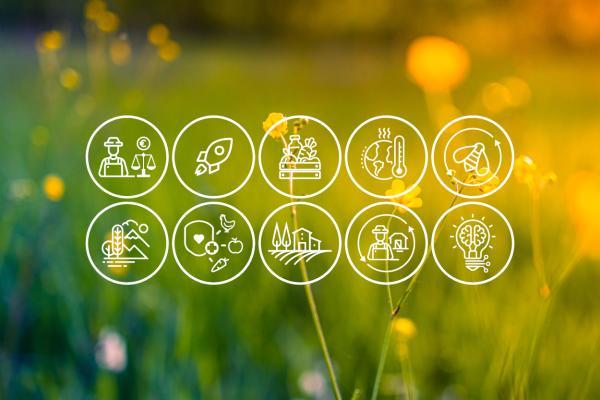
For the period 2023-2027, the Common Agricultural Policy (CAP) is based on ten key objectives. Focused on social, environmental and economic aspects, these objectives form the basis on which the EU countries have developed their strategic plans of the CAP.
The objectives are:
- ensure a fair income for farmers;
- increase competitiveness;
- improve the position of farmers in the food supply chain;
- take action to combat climate change;
- protect the environment;
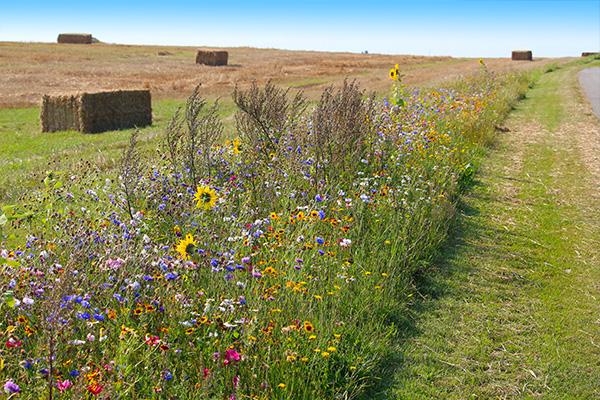
- preserving the landscape and biodiversity;
- support generational change;
- developing dynamic rural areas;
- protect the quality of food and health;
- promote knowledge and innovation.
The CAP 2023-2027 contains a series of policy reforms to support the transition to sustainable agriculture and forestry in the EU.
A greener CAP. The CAP 2023-2027 helps agriculture to make a much stronger contribution to achieving the objectives of the European Green Deal:
- more ambitious environmental targets;
- contribute to the goals of the Green Deal;
- enhanced conditionality (CAP beneficiaries' payments are linked to a stricter set of mandatory requirements. For example, a percentage is earmarked for biodiversity and non-productive elements with the possibility of receiving support through ecological schemes);
- ecological regimes (at least 25% of the budget for direct payments);
- rural development (at least 35% of the funds are earmarked for climate, biodiversity, environment and animal welfare measures);
- operational programmes;
- climate and biodiversity.
A fairer CAP. The 2023-2027 CAP directs support to those who need it most:
- redistribution of income support;
- active farmers;
- social conditionality (CAP payments are conditional on compliance with certain EU labour standards and beneficiaries are incentivised to improve working conditions on farms);
- convergence of payments;
- support for young farmers;
- improve gender balance.
Finally, the 2023-2027 CAP aims to strengthen the position of farmers in the supply chain and boost the competitiveness of the agri-food sector (improving bargaining power, maintaining a market orientation, providing for a crisis reserve, enacting specific sectoral regulations such as those supporting the wine sector).
CAP funding comes from two different funds: the European Agricultural Guarantee Fund (EAGF), first pillar for income support (direct payments), and the European Agricultural Fund for Rural Development (EAFRD). The EAFRD budget includes resources from NextGenerationEU to help rural areas make the structural changes needed to achieve the objectives of the European Green Deal
To these funds must be added those intended for promoting research, knowledge sharing and innovation to ensure a smart and sustainable agricultural sector (under the Horizon Europe Programme).
Sustainability in the Common Agricultural Policy (CAP)
The Common Agricultural Policy (CAP) manifests three main aspirations, which need to be shared and “put into practice” in order to achieve a sustainable system of agriculture in the EU:
- economic sustainability
- environmental sustainability
- social sustainability of companies.
In order to achieve these three important objectives, EU countries use a wide range of targeted interventions that aim to address their specific needs and define the CAP strategic plans. Through the strategic plans, EU countries offer income support to farmers, support them in the transition to sustainable production and help realise the ambitions of the European Green Deal.
Economic sustainability in the CAP
With regard to the first objective, the CAP promotes sustainable economic practices in order to to protect the long-term viability of agriculture.
Without the ability to provide a stable and rewarding income in the short and long term, agriculture would not be able to provide its essential products and services for society.
The CAP therefore includes several instruments to ensure the economic viability of farms. The economic instruments of the CAP can also contribute and should not harm the environment or social sustainability.
Although farmers can do much to improve the sustainability of their activities, economic sustainability depends to a large extent on external factors (weather and climate, geopolitical events, diseases, etc.).
The CAP includes appropriate instruments to safeguard and protect the short- and long-term economic viability of farms, while also ensuring resilience, enhancing market orientation, increasing competitiveness and improving the position of farmers in the value chain.
These objectives can be achieved through the following policy instruments:
- Fostering sustainable agricultural income and resilience across the Union to improve food securitythrough the implementation of a fair income support system, providing tools to help manage risks and achieve greater equality in the food supply chain and a level playing field with imported products;
- Improving market orientation and increasing competitivenessthrough the provision of rural development support for investments in, for example, modernisation or cooperation, together with financial instruments; this objective is also supported by the EU policy on Geographical Indications and quality schemes;
- Improving the position of farmers in the supply chainthrough the provision of specific support to certain sectors (fruit and vegetables, beekeeping, wine, hops, olive oil and table olives, and others).
Sectoral interventions strengthen the position of farmers, including through producer organisations and associations of producer organisations, and improve their resilience and competitiveness. In addition to resilience and competitiveness, these organisations offer numerous benefits. For example, they enable farmers to collectively investing in technology that might otherwise be financially unfeasible for them individually, thus promoting economically, socially and environmentally sustainable production practices.
In addition, sectoral interventions contribute to strengthening farmers' positions in the value chain by granting producer organisations exemptions from certain competition rules. This essentially allows farmers to exploit their collective bargaining power.
Still looking at the economic dimension of sustainability, it must be remembered that agriculture and forestry are important suppliers of biomass, as they provide raw materials for the bioenergy production, thus providing income support for companies.
With regard to the second objective above (environmental sustainability), the CAP places good environmental practices at the heart of agriculture in the EU, ensuring that protection of the planet and food production can go hand in hand.
Environmental sustainability in the CAP
An environmentally sustainable CAP respects environmental standards, encourages green agriculture with low input - favouring a sustainable use of pesticides and supporting farmers in the’safe and efficient use of nutrients - helps farmers cope with the effects of climate change, contributes to protecting natural resources (healthy soils, preservation of water reserves, clean air), aims to protect and enhance biodiversity, and is attentive to animal welfare.
The Common Agricultural Policy pursues these aims by subordinating payments to beneficiaries to a number of management requirements statutory (statutory management requirements-SMR) e good agricultural and environmental conditions (good agricultural and environmental conditions-GAEC) in accordance with rules of conditionality, and listing a range of potential agricultural practices that ecological schemes could support within its framework.
Eco-schemes are a new instrument of the CAP to support the transition to a sustainable food system and intensify the efforts of European farmers in contributing to the EU's climate goals and environmental protection, and each EU country includes them in its strategic plan. The European Commission assessed and approved them as key instruments of the CAP to meet the objectives of the Green Deal.
The following agricultural practices, supported by ecological schemes, correspond to actions under the CAP strategic plans in the areas of environment, climate change and animal welfare:
- organic and integrated farming practices (established in EU policy instruments);
- agroecology (e.g. crop rotation);
- breeding and animal welfare plans (feeding plans, favourable housing conditions, practices and methods laid down in organic farming standards, practices to increase robustness, fertility, longevity and adaptability of animals, animal health prevention and control plans, guaranteed access to pastures and extended grazing periods for farm animals; provision and management of regular access to open spaces);
- agroforestry system;
- agriculture with a high natural value;
- carbon sequestration in agricultural soils;
- precision agriculture;
- improved nutrient management;
- protection of water resources;
- other beneficial soil practices (e.g. erosion control strips and windbreaks);
- other practices related to greenhouse gas emissions (feed additives to reduce emissions from enteric fermentation; improved effluent management and storage).

Social sustainability of the CAP
Agriculture is not only about farmers and their families, but also supports society as a whole, across the EU, through a number of essential services. In particular, agriculture:
- provides food and other essentials to citizens;
- serves as the backbone of rural communities.
The Common Agricultural Policy (CAP) ensures that farmers can continue to provide these services in the long run, promoting the economic sustainability of agriculture. In turn, the CAP's economic measures contain social provisions, such as support for small farmers and redistributive payments.
The environmental actions of the CAP are also designed to be socially sustainable. By supporting management commitments and investments to protect the environment, the CAP enables all farmers to protect natural resources and biodiversity on behalf of society: an essential service that would otherwise not be remunerated by the market.
Furthermore, with policies and actions specifically aimed at food security and supporting rural communities, the CAP ensures that agriculture can contribute to sustainability at all levels of society.
The 2023-2027 programming of the Common Agricultural Policy introduced the so-called “social conditionality” (CS), which requires compliance with three European regulations on worker safety and contractual regularity as a condition for receiving income support (Pillar I) and payments related to environmental-climatic commitments, natural constraints or specific territorial disadvantages (Pillar II). Italy was one of the countries that decided to apply CS from the start of the new programming period (1 January 2023), together with France, Austria and Luxembourg.
The support to society provided by the Common Agricultural Policy also finds a multiplier effect in the attention that, in turn, primary sector and food industry operators, and their supply chain associations (such as the Consorzi di Tutela delle IG), pay to workers (by implementing appropriate personnel policies) and to the communities with which they interface on a daily basis (by supporting, for example, socio-cultural initiatives).
All this contributes to the vitality of rural areas and to ensuring their prosperous future.
In this area, knowledge, research and innovation can also breathe vitality into rural areas and help secure a vibrant future for local communities. Rural development policy supports innovation and research in these areas with various instruments, fostering the resilience of rural communities and playing an important role in stimulating green and socially inclusive economic growth.
CAP instruments to support GI sectors
As mentioned, each EU country implements a national CAP strategic plan bringing together funding for income support, rural development and market measures. In defining their strategic plans, EU countries contributed to the achievement of the ten specific objectives through a package of comprehensive policy measures provided by the Commission, which were defined according to national needs and capacities.
The CAP legislation establishes a common set of periodically monitored indicators to assess the progress made by EU countries in achieving their final targets and the objectives of the Common Agricultural Policy itself.
The CAP 2023/2027 National Strategic Plan (NSP) presented by Italy (and amended three times) aims to promote a sustainable agri-food system, improve the competitiveness of agricultural supply chains and ensure product quality and food safety.
As far as quality products are concerned, the Plan aims to strengthen the role of Geographical Indication productions. In fact, such productions ensure high quality standards and are characterised by strict traceability, which guarantees food safety and the origin of raw materials. In addition, the Geographical Indication system helps to promote the local economy and environmental protection, given the deep connection the products have with their territory of origin.
The Plan, through the sectoral interventions (in particular in the fruit and vegetable, wine and olive-growing sectors), supports participation in and implementation of PDO and PGI quality schemes, their promotion and the improvement of their traceability and sustainability. In addition, these interventions make it possible to strengthen the role of the Protection Consortia and their capacity for aggregation and development.
Sectoral interventions act synergistically with those of the rural development which include further support measures for the competitiveness and environmental sustainability of agri-food chains and enterprises and for the participation in and promotion of quality schemes.
To summarise the support instruments of the 2023/2027 PHP, it is possible to distinguish between:
- direct payments (basic income support for sustainability, climate and environment and animal welfare schemes, complementary redistributive income support for sustainability, coupled support);
- sectoral interventions (fruit and vegetables, wine-growing, olive growing, potato growing, beekeeping);
- rural development interventions (environmental, climatic and other management commitments, natural or other specific territorial constraints, specific territorial handicaps resulting from certain mandatory requirements, investments, young and new farmers setting up rural businesses, risk management tools, cooperation, knowledge exchange and information dissemination).
Interventions to support PDO-PGI sectors therefore range from sectoral (measures for promotion, implementation of Union and national quality schemes, and implementation of traceability and certification systems) to those of rural development (participation in quality schemes, promotion of quality products, investments for farm competitiveness, environment, climate, animal welfare and for processing and marketing of products, non-agricultural productive investments in rural areas, integrated supply chain projects).
The ecological transition and environmental sustainability of PDO and PGI supply chains ultimately represent a major challenge for the Plan, and for the entire agri-food sector, but at the same time also a major economic opportunity.
To promote the ecological transition and improve the environmental sustainability of PDO and PGI supply chains, it is necessary to encourage the adoption of higher environmental standards, use new technologies and more sustainable processes, and promote research and innovation.
The changes proposed under the new CAP
As is well known, the current CAP (2023–2027) is organised around a financial framework based on two funds (the EAGF and the EAFRD).
The new CAP 2028–2034, proposed by the European Commission, it will no longer have the current two-pillar structure – the first, intended for direct payments and sectoral support; the second, dedicated to rural development – providing for the establishment of a Single fund, entitled “European Fund for Economic, Territorial and Social Cohesion; agriculture and rural development; fisheries and maritime policy; prosperity and security”, and a’single list of instruments, no longer divided between the 1st and 2nd pillars.
The new Single Fund will bring together 14 existing funds, overcoming the fragmentation between the various Structural Funds (EAGF, EAFRD, EMFF, ESF, ERDF, CF, etc.).
The instrument for implementing the Single Fund’s policies at national level will be the Ppnr – national and regional partnership plans.
These plans will make use of all EU funds, through a targeted and coherent planning process that pursues the European Union’s common priorities, whilst allowing a high degree of flexibility in adapting to national, regional and local needs.
The change, therefore, is that there will no longer be the PSP (CAP Strategic Plan), but a single plan (Ppnr), which will serve as the planning document for all national support policies (agriculture, rural development, fisheries, economic and territorial cohesion, social policy for workers, asylum and migration, internal security, border management, etc.).
The Commission’s proposal for the new CAP 2028–2034 sets out a list of 19 types of support, which includes almost all of those currently provided for under the two existing pillars.
The Commission plans to provide income support to active farmers by including them in the “farm stewardship” measures to ensure high social, environmental and animal welfare standards (replacing environmental and social cross-compliance).
The green architecture is, in fact, being revised, with agri-environmental and climate measures (so-called ‘eco-schemes’) being integrated into a single support scheme; Member States may provide incentives to farmers for these measures on a voluntary basis (e.g. organic farming, crop rotation).